Saturday, June 17, 2023
IT CANNOT BE CHANGED
Tuesday, June 6, 2023
TAI CHI WALK COMPARED TO EVERDAY WALK
Friday, June 2, 2023
Anything goes!
Marty S. has left a new comment !
"Like anything else to be proficient in tai chi the practitioner must put the time in. As a practitioner of over 40 years, I've learned and I am still learning.
With that said if you are interested in learning tai chi as a self defense you must practice push hands with many opponents and then practice sparring with many oponents.
You can not get the feel and practical ability without having the experience of sparring. "
Thanks:
It is true that one must "practice push hands and sparring with many opponents" as an integral part of martial training in Tai Chi. In the case of Classical Tai Chi however, push hands and sparring are taught after one can show at least some rudimentary internal discipline. Practicing even push hands before that physical internal development is putting the cart before the horse. All it does, is to confuse the student and merely gives one the illusion of progress. Notice, I say "physical" internal development, because merely having the right mental attitude aka an "internal demeanor" does not confer physical internal discipline. We have spoken extensively of Internal Energy, and to reiterate, it occurs inside the body with the physical turning of the body at the core, using a compact frame not the hips, kua, etc. of a large frame.
Now we have to go a bit off the beaten path from our discussion of internal energy to deal with self-defense. The reason is that in self-defense...anything goes and we are not limited to using internal energy/internal discipline. I do agree with your assertion however about push hands/sparring being an integral part of self defense training, but with the stringent caveat that it also has severe limitations which are overlooked. My own 40 years of experience and research tell me that sparring, push hands, weapons, etc. are good martial training but unfortunately most often give people the "Illusion" that they have self defense ability.
In all self defense situations however, I learned the hard way that "anything goes" which Tai Chi in a controlled push hands and sparring does not teach. I also have rather unfortunate experience with personal self defense in light of violent physical attacks. As it has been said, one can be attacked by people and wild animals but what holds one in stead is an accurate appraisal of one's integrity. In other words, not only an honest assessment of one's own abilities and/or limitations martially, but ask yourself do you honestly want to hurt someone or do you simply want to just defend yourself. I've met many people over the years both teachers and others who seem to take enjoyment from the hurt that others have to endure at their hands.
To close, I think that in being honest with myself and my own abilities that the experience of sparring and push hands is wishful thinking when it comes to being mugged by a large group of people. Sparring and push hands is wishful thinking when it comes to someone trying to run you down with their automobile. Sparring and push hands is wishful thinking when it comes to someone confronting you with a firearm from 5 feet away. I think you see my point and I'm sure you would agree that sparring and push hands have their uses but we should also be aware of their limitations. Hence, my feelings that martial training may often give people the illusion of self-defense in one time situations but internal energy is for life.
Saturday, May 13, 2023
Dual purposes of Tai Chi
I'm not a diplomatic teacher, and that sometimes turns people off...I can make no apologies. I am not diplomatic here. There has been too much belittling of Tai Chi and I explain that below. I teach students to also check their reasoning in Tai Chi. My teacher does not pussyfoot with me either, he calls me on it when my reasoning is wobbly or way off.
Dual purposes here in this video link
When you view the video, read my blog and Facebook, in-depth, I think you'll find the raison d'etre of Classical Tai Chi is not stress and inner peace. Many things call themselves Tai Chi but are merely exercise or "wine and cheese" excuses to socialize...they are not Tai Chi. In my experience, those Tai Chi's all cut corners in learning. Take out movements here, take out moves there, and pretty soon it does not resemble what should be passed on. You do all that cutting of corners and the whole logical structure collapses. There has been way too much of that
In my experience, those things like stress relief are "perks" however that come with much, much time, not a fad of the month club. Tai Chi's existence is to enable one to attain longevity while living like a young person ( while living in the springtime of one's life). This takes time to come.
Many people don't think Tai Chi is a martial art. Yang Wabu (my teacher's teacher) was a top-notch martial artist when he met his teacher Wu Chien Chuan. Yang was already a Master of Pekkwar Monkey Boxing and versed in numerous other external styles martial arts . He was well-known in Hong Kong. Yang told my teacher that he could not mount an attack against Wu because Wu would just keep him off balance. That is Tai Chi as a martial art.
I talk to many people who not only don't think Tai Chi is a martial art, they run the other way when you tell them it is. In light of things like Tai Chi for seniors, Tai Chi for spiritual growth, Tai Chi for stress relief, Tai Chi for idiots (name of book on Amazon) Tai Chi for arthritis, Tai Chi for Fibromyalgia, Tai Chi for kids, etc. is there any wonder why people think that way? I am a martial artist but above all, I'm here to right the Tai Chi ship not cater to Heinz's 57 varieties of Tai Chi.
Tai Chi has to achieve 2 purposes, be there for martial ability and be there for health. It comes from martial artists, for instance, Wu Chien Yau and his son Wu Chien Chuan were bodyguards in the Imperial Palace and officers in the Manchurian Banner Guard. They learned from the Yang Family (martial instructors of the emperor's family), and Yangs learned from Chens. Wu Chien Chuan (bodyguard/soldier) was a teacher of Young Wabu who was the teacher of Stephen Hwa who is my teacher.
Sunday, May 7, 2023
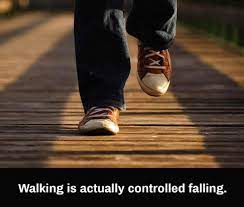
Can "Controlled Falling" (ordinary walking) improve balance?
Classical Tai Chi walk goes to numerous dimensions of movement (video)
Wednesday, May 3, 2023
Trade in your "inner being" for "internal energy"
Re this image: Getting Internal Energy also involves knowing what is "incorrect" about body structure and what is "correct"...- Tai Chi Square and Round Form
- Internal Discipline
- Internal Discipline in Tai Chi Walking
- Silk Reeling
- Tai Chi Walk
Tuesday, May 2, 2023
Aid to footwork for beginners
Click "link to aid on "footwork." It is a video!
Lift Legs using lower Quarter Body movement
Paraphrase and excerpted from Page 5., "Internal Discipline of Tai Chi": Uncovering The Treasure: Classical Tai Chi's Path to Internal Energy & Health Paperback – May 12, 2010
"Walking" in Classical Tai Chi
A relatively new student was asked to clarify what they experienced when learning the footwork for Classical Tai Chi. It was done with the caveat of placing a palm on their belly to feel the core movement as they moved.
"I'll try my best if I can clarify that correctly. In forward walking, every footwork is done through 3 phases. Let's say that we want to step forward with our right foot.
In the first phase, step forward so that the heel of the right foot lands on the ground and the toes point up, but the whole weight is still on the left back foot.
The second phase: The right foot is fully landed on the ground, but the whole weight is still on the back foot. This phase is critical because here, we begin to feel the engagement of the core area in the movement.
The third phase:: At this stage, the weight shifts from the left to the right foot, and the body leans forward, provided the right knee does not exceed the toes. "
I asked him if he found the training difficult and liked or disliked it.
"I think it is very interesting, and I like how Master Hwa explains the movements in the online Teachable videos. I like your notes on the Teachable course and the information you provide on the Classical Tai Chi of NY and California Facebook page. One should repeatedly watch the videos because I find there are points I should reconsider."
Tuesday, April 25, 2023
1. HEALTH AND STRENGTH WITH TAI CHI 1. What is an internal martial art?
From Stephen Hwa's book: "Uncovering the Treasure, Classical Tai Chi's Path to Internal Energy and Health" @ Amazon, Streamlined Online course at Teachable and Overview from the DVD series. Thanks to Master Stephen Hwa for his permission to publish this video here. This video is from Master Hwa's streamlined online course. The video link is to an "unlisted" version; only students with the link can see the video.
Introduction "There are so many books, classes, and styles of tai chi today. There is talk of internal energy in many of them. Yet, the definition could be more precise, and the route to achieving it is unexplained. Join me in uncovering the crucial missing pieces to truly understanding Tai Chi, i.e., the internal energy that powers Tai Chi movements and the learning program to develop such energy. How various components in the Tai Chi teaching program, such as Large Frame and Compact Frame Form, Square and Round Form, silk reeling exercises, etc., fit into the learning program are discussed in detail. It will show that Tai Chi's abilityto mobilize the body's energy and deliver it efficiently s one of the prime reasons distinguishing it as a martial art. It is the cultivation of this internal energy that produces the most significant health benefits of Tai Chi."
Wednesday, April 12, 2023
Internal Exercise for Power and Vitality
Explanation of the Movements Section 1: Connecting Arm Movements with the Movement of the Torso (Upper Quarter Body Movements)This choreographically simple movement requires subtle and demanding neuromuscular control. It is the most advanced Internal Move in Tai Chi.
Articulating basic and essential concepts (such as lowering the shoulder - by dropping the elbow and how to connect the elbow to the abdomen) and making them accessible by demonstration and metaphor ("stick-shift). The instruction is generous and insightful and shows a craft-like path to becoming consciously competent. The student demonstration is quite helpful - as a contrast and teaching.
About 15 years ago, filming Tao of Martial Applications, I asked my teacher Master Stephen Hwa Ph.D. Chemical Engineer “People from large and medium frames want to use internal discipline; why not?” Stephen Hwa: “The mechanics are different” So I wrote this: 𝐓𝐡𝐞 𝐥𝐚𝐫𝐠𝐞𝐫 𝐭𝐡𝐞 𝐓𝐚𝐢 𝐂𝐡𝐢 “𝐅𝐨𝐫𝐦” 𝐦𝐨𝐯𝐞𝐦𝐞𝐧𝐭 𝐭𝐡𝐞 𝐦𝐨𝐫𝐞 𝐝𝐢𝐬𝐬𝐨𝐜𝐢𝐚𝐭𝐢𝐨𝐧 𝐰𝐢𝐭𝐡 𝐭𝐡𝐞 𝐂𝐨𝐫𝐞! 𝐓𝐡𝐞 𝐬𝐦𝐚𝐥𝐥𝐞𝐫 𝐭𝐡𝐞 𝐓𝐚𝐢 𝐂𝐡𝐢 “𝐅𝐨𝐫𝐦” 𝐦𝐨𝐯𝐞𝐦𝐞𝐧𝐭 𝐭𝐡𝐞 𝐦𝐨𝐫𝐞 𝐚𝐬𝐬𝐨𝐜𝐢𝐚𝐭𝐢𝐨𝐧 𝐰𝐢𝐭𝐡 𝐭𝐡𝐞 𝐜𝐨𝐫𝐞. 𝐈𝐭'𝐬 𝐬𝐢𝐦𝐩𝐥𝐲 𝐭𝐡𝐞 𝐦𝐞𝐜𝐡𝐚𝐧𝐢𝐜𝐚𝐥 𝐚𝐝𝐯𝐚𝐧𝐭𝐚𝐠𝐞 𝐠𝐚𝐢𝐧𝐞𝐝 𝐟𝐫𝐨𝐦 𝐠𝐞𝐧𝐞𝐫𝐚𝐭𝐢𝐧𝐠 𝐦𝐨𝐯𝐞𝐦𝐞𝐧𝐭 𝐟𝐫𝐨𝐦 𝐭𝐡𝐞 𝐜𝐨𝐫𝐞.”
Monday, April 10, 2023
Key Points In Beginning Part Of Round Form Youtube video
Key Points in Beginning Part of Round Form video link
Correction of common mistakes of beginners learning Tai Chi Round Form.
Thanks for this, Master Hwa. The "common mistakes" are indeed endemic. There is indeed lots of "outward arm movement" in Tai Chi. If one has learned other Tai Chi, It is hard to remove from the "subconscious" when learning "internally".
I gave up the "other" Tai Chi and those mistakes I learned when I began studying with you in 2003. I gave up the Karate, Taekwondo, and Tai Chi I had learned previously when I began studying with the Wu Family in Toronto, mid "the 80's", I was told I had to because I was teaching it.
I know your teacher Young Wabu was told to give them up and gave up the martial arts he had learned previously when he began studying with Wu Chien Chuan. I think there is an imperative people do not think of and that is what they learned previously is "subconscious". So when I studied in Toronto, for instance, I had a hard time not kicking like I did with Taekwondo and it created many problems in learning Wu's Style Tai Chi.It really showed up in "free sparring".
External Resistance vs. Internal Discipline
https://payhip.com/b/OfHUn The link is a link to learning : I speak of "large frame/large circle" Tai Chi in order to compare it t...
-
The Wuji Form and application of Zhan Zhuang will now be presented. Authored by J.B. Milne and Stephen Hwa, Ph.D. Authored and edit...
-
Classical Tai Chi is based on Wu Style Taiji. It has a rather unique palm and in particular a unique thumb position. A student expressed pu...

.png)