Saturday, May 13, 2023

Dual purposes of Tai Chi

 I'm not a diplomatic teacher, and that sometimes turns people off...I can make no apologies.  I am not diplomatic here.  There has been too much belittling of Tai Chi and I explain that below. I teach students to also check their reasoning in Tai Chi.  My teacher does not pussyfoot with me either, he calls me on it when my reasoning is wobbly or way off.   


Dual purposes here in this video link

When you view the video, read my blog and Facebook, in-depth,  I think you'll find the raison d'etre of Classical Tai Chi is not stress and inner peace.  Many things call themselves Tai Chi but are merely exercise or "wine and cheese" excuses to socialize...they are not Tai Chi.    In my experience, those Tai Chi's all cut corners in learning. Take out movements here, take out moves there, and pretty soon it does not resemble what should be passed on.  You do all that cutting of corners and the whole logical structure collapses. There has been way too much of that  


In my experience, those things like stress relief are "perks" however that come with much, much time, not a fad of the month club.  Tai Chi's existence is to enable one to attain longevity while living like a young person ( while living in the springtime of one's life). This takes time to come. 


Many people don't think Tai Chi is a martial art.   Yang Wabu (my teacher's teacher) was a top-notch martial artist when he met his teacher Wu Chien Chuan. Yang was already a Master of Pekkwar Monkey Boxing and versed in numerous other external styles martial arts .  He was well-known in Hong Kong. Yang told my teacher that he could not mount an attack against Wu because Wu would just keep him off balance.  That is Tai Chi as a martial art. 


 I talk to many people who not only don't think Tai Chi is a martial art, they run the other way when you tell them it is.   In light of things like Tai Chi for seniors, Tai Chi for spiritual growth, Tai Chi for stress relief, Tai Chi for idiots (name of book on Amazon) Tai Chi for arthritis, Tai Chi for Fibromyalgia, Tai Chi for kids, etc. is there any wonder why people think that way? I am a martial artist but above all, I'm here to right the Tai Chi ship not cater to Heinz's 57 varieties of Tai Chi. 


Tai Chi has to achieve 2 purposes, be there for martial ability and be there for health.  It comes from martial artists, for instance, Wu Chien Yau and his son Wu Chien Chuan were bodyguards in the Imperial Palace and officers in the Manchurian Banner Guard.  They learned from the Yang Family (martial instructors of the emperor's family), and Yangs learned from Chens. Wu Chien Chuan (bodyguard/soldier) was a teacher of Young Wabu who was the teacher of Stephen Hwa who is my teacher.  


Sunday, May 7, 2023

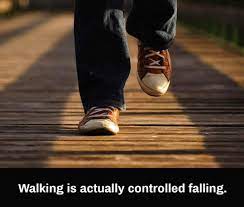
Can "Controlled Falling" (ordinary walking) improve balance?

 Classical Tai Chi walk goes to numerous dimensions of movement  (video)


Can everyday walking improve your balance?
I told a friend I was going to write this article. They said they vividly recall the time when they broke their femur from attempting to learn rollerblading. One of the family dogs had run in front of them and they crashed onto their side. OK, enough of the anecdotes but I just want to add that their Doctor did not tell them to "take walks" and improve their balance.  The reason being he knew that the friend practiced Tai Chi. However, he was familiar enough with its pros and cons to know that it may not keep beginners from falling on rollerblades.  Taking a walk will not improve balance and here's why:  It is well-researched that everyday walking improves cardio. Walking, however, just keeps you moving your body in one dimension, let's call it "X" and most often that is forward and upright.  Tai Chi multiplies those dimensions, let's add in "Y" and "Z" as you see in the video, side, back, up, down, bending, arms, legs, angles, etc. Your area in which you can viscerally learn postural stability is multiplied, and its size is increased. One learns to "catch" themselves and right their balance in any situation where they go off-kilter. How's that for logical reasons for you to start learning Classical Tai Chi?

Wednesday, May 3, 2023

Trade in your "inner being" for "internal energy"

Re this image: Getting Internal Energy also involves knowing what is "incorrect" about body structure and what is "correct"...


I would love to join your classes when you start them in California! I hope there is room, or else Im sure I can find another time:) I love energy work and connecting with my Inner Being (as everyone does without knowing it;) Cant wait to start! I take long bike rides. I was wondering if this would hinder any of the energy flow? Maybe it would ground it more? Anyways peace and love!

Peace and Love,
aaauuummm


Dear aaauuummm,

So much of what we do with Classical Tai Chi is directed toward "inner". Conversely there are books, dvd's, varieties of "Tai Chi". In all of those we hear of "inner" as well but what "inner" is has never been made clear and how to achieve "inner" is not articulated.

So much of what we do with Classical Tai Chi is directed toward "energy flow". Conversely there is much information along with many varieties of Tai Chi. In all of those we hear of "energy flow" as well, but what "energy flow" is has never been made clear and how to achieve "energy flow" is not articulated.

So what has not been made clear and what has not been explained can be considered to be the essential parts of the picture that have been left out. What is "inner" in Classical Tai Chi? and How do I get "energy flow"? might be 2 questions to ask oneself.
The videos at the end of this discussion(click on them) are parts of what we teach in Classical Tai Chi. Looking at them one might see things as being complicated. Further viewing is necessary then one begins to see that there are rules for what we do. Then one begins to see the outline or structure of what we do. Finally one sees that this is indeed based on scientific reasoning. All of these things are stringently linked together even though one may not see that linkage in the beginning.

The definition of "inner" can also be interchanged with the word "internal". The word "Inner" can be linked with "energy flow" and we have "internal energy" View the videos and then begin summarizing to yourself how (much like a puzzle) the pieces fit together to achieve "internal energy flow".

Your use of the word "inner" out of context from "energy flow" suggests that you may believe that Tai Chi is simply about having the correct mental demeanor and that any movement will thus be a correct one. I have heard this many times before and in his book "Uncovering the Treasure" my teacher refers to it as "an unspoken belief among modern Tai Chi practitioners that as long as one has the right mental state, almost any movement is a Tai Chi movement".

What is little known (a missing piece) is that Tai Chi has a physical "inner" or internal discipline which is called in Chinese..."Neigong" (nay gong). The other missing piece is that the physical "internal energy flow" is what is transmitted and generated from the correct use of body mechanics. This is called "neijing" (nay jing) it is the physical "inner or internal energy" created and circulated within the body while the body externally is physically relaxed. Note my persistent use of the word "physical". This gets us away from reliance on "inner" as a strictly mental component necessary to do Tai Chi or what my teacher calls "the emphasis on the ethereal aspects of Tai Chi".

See you in class,
Sifu Jim Roach

Tuesday, May 2, 2023

Aid to footwork for beginners


Click "link to aid on "footwork." It is a video!

Link to aid on "footwork"


"Very good. It really should help beginners on the footwork."  Master Stephen Hwa

An unlisted Youtube link to a video. My student Jason Bulger is doing a variation I "discovered" in my experimentation with lower body movement. Also, "discovered" one needs to do this to 8 angles, N, NE, NW, S, SE, SW, E,W, not just front. That type of practice coincides with Classical Tai Chi Form instruction, wherein the first piece of business is teaching students to step and move in one of the 8 directions.

* Turning feet to various angles coincides with foot placement in the "Form
* Turning feet to various angles coincides with the numerous foot positions in the "kicking section".
*As you get comfortable with this, I recommend just very lightly touching (we had a tree) a surface or wall with just tip of a finger.
*Lightly touching with a finger is not a crutch, but it is enough to help you maintain good body structure while you do this.
*This is Jason's first try, so he is bending his head too much; otherwise, the internal movement seems very good.
*Use abdominal and back muscles to lift

Lift Legs using lower Quarter Body movement


"The leg lifting is accomplished by using abdominal and back muscles to lift either side of the pelvis, which in turn lifts the leg. In this case with Jason, either leg is completely relaxed since the lifting is done by internal power and not the leg muscles. The moving part is the leg and its associated abdominal and back muscles, while the other body parts remain stationary to provide support and grounding. Depending on which leg is lifted, the Yin-yang junction may be visualized in either the right or left side of the abdomen and back region. One could classify this as a lower-quarter body movement. All lower body movements are from the core. This is just one example of it. Practicing with an imaginary mental picture that the legs do not end at the hip joints, but rather there is a leg extension into the core of the body has helped some students learn how to initiate lower body movements from the core."


Paraphrase and excerpted from Page 5., "Internal Discipline of Tai Chi":  Uncovering The Treasure: Classical Tai Chi's Path to Internal Energy & Health Paperback – May 12, 2010


"Walking" in Classical Tai Chi

"Walking" video link 


A relatively new student was asked to clarify what they experienced when learning the footwork for Classical Tai Chi. It was done with the caveat of placing a palm on their belly to feel the core movement as they moved.

"I'll try my best if I can clarify that correctly. In forward walking, every footwork is done through 3 phases.  Let's say that we want to step forward with our right foot.

In the first phase, step forward so that the heel of the right foot lands on the ground and the toes point up, but the whole weight is still on the left back foot.

The second phase: The right foot is fully landed on the ground, but the whole weight is still on the back foot.  This phase is critical because here, we begin to feel the engagement of the core area in the movement. 

The third phase:: At this stage, the weight shifts from the left to the right foot, and the body leans forward, provided the right knee does not exceed the toes. "

I asked him if he found the training difficult and liked or disliked it.

"I think it is very interesting, and I like how Master Hwa explains the movements in the online Teachable videos. I like your notes on the Teachable course and the information you provide on the Classical Tai Chi of NY and California Facebook page. One should repeatedly watch the videos because I find there are points I should reconsider."


Tuesday, April 25, 2023

1. HEALTH AND STRENGTH WITH TAI CHI 1. What is an internal martial art?


 Video Link

From Stephen Hwa's book: "Uncovering the Treasure, Classical Tai Chi's Path to Internal Energy and Health" @ Amazon, Streamlined Online course at Teachable and Overview from the DVD series. Thanks to Master Stephen Hwa for his permission to publish this video here. This video is from Master Hwa's streamlined online course. The video link is to an "unlisted" version; only students with the link can see the video. 


Introduction "There are so many books, classes, and styles of tai chi today. There is talk of internal energy in many of them. Yet, the definition could be more precise, and the route to achieving it is unexplained. Join me in uncovering the crucial missing pieces to truly understanding Tai Chi, i.e., the internal energy that powers Tai Chi movements and the learning program to develop such energy. How various components in the Tai Chi teaching program, such as Large Frame and Compact Frame Form, Square and Round Form, silk reeling exercises, etc., fit into the learning program are discussed in detail. It will show that Tai Chi's abilityto mobilize the body's energy and deliver it efficiently s one of the prime reasons distinguishing it as a martial art. It is the cultivation of this internal energy that produces the most significant health benefits of Tai Chi."

Wednesday, April 12, 2023

Internal Exercise for Power and Vitality


Video link
Connecting arm to core "advanced"

Explanation of the Movements Section 1: Connecting Arm Movements with the Movement of the Torso (Upper Quarter Body Movements)This choreographically simple movement requires subtle and demanding neuromuscular control. It is the most advanced Internal Move in Tai Chi.

 Articulating basic and essential concepts (such as lowering the shoulder - by dropping the elbow and how to connect the elbow to the abdomen) and making them accessible by demonstration and metaphor ("stick-shift). The instruction is generous and insightful and shows a craft-like path to becoming consciously competent. The student demonstration is quite helpful - as a contrast and teaching. 


About 15 years ago, filming Tao of Martial Applications, I asked my teacher Master Stephen Hwa Ph.D. Chemical Engineer “People from large and medium frames want to use internal discipline; why not?” Stephen Hwa: “The mechanics are different” So I wrote this: 𝐓𝐡𝐞 𝐥𝐚𝐫𝐠𝐞𝐫 𝐭𝐡𝐞 𝐓𝐚𝐢 𝐂𝐡𝐢 “𝐅𝐨𝐫𝐦” 𝐦𝐨𝐯𝐞𝐦𝐞𝐧𝐭 𝐭𝐡𝐞 𝐦𝐨𝐫𝐞 𝐝𝐢𝐬𝐬𝐨𝐜𝐢𝐚𝐭𝐢𝐨𝐧 𝐰𝐢𝐭𝐡 𝐭𝐡𝐞 𝐂𝐨𝐫𝐞! 𝐓𝐡𝐞 𝐬𝐦𝐚𝐥𝐥𝐞𝐫 𝐭𝐡𝐞 𝐓𝐚𝐢 𝐂𝐡𝐢 “𝐅𝐨𝐫𝐦” 𝐦𝐨𝐯𝐞𝐦𝐞𝐧𝐭 𝐭𝐡𝐞 𝐦𝐨𝐫𝐞 𝐚𝐬𝐬𝐨𝐜𝐢𝐚𝐭𝐢𝐨𝐧 𝐰𝐢𝐭𝐡 𝐭𝐡𝐞 𝐜𝐨𝐫𝐞. 𝐈𝐭'𝐬 𝐬𝐢𝐦𝐩𝐥𝐲 𝐭𝐡𝐞 𝐦𝐞𝐜𝐡𝐚𝐧𝐢𝐜𝐚𝐥 𝐚𝐝𝐯𝐚𝐧𝐭𝐚𝐠𝐞 𝐠𝐚𝐢𝐧𝐞𝐝 𝐟𝐫𝐨𝐦 𝐠𝐞𝐧𝐞𝐫𝐚𝐭𝐢𝐧𝐠 𝐦𝐨𝐯𝐞𝐦𝐞𝐧𝐭 𝐟𝐫𝐨𝐦 𝐭𝐡𝐞 𝐜𝐨𝐫𝐞.”


Monday, April 10, 2023

Key Points In Beginning Part Of Round Form Youtube video


Key Points in Beginning Part of Round Form video link


Correction of common mistakes of beginners learning Tai Chi Round Form.

 Thanks for this, Master Hwa. The "common mistakes" are indeed endemic.  There is indeed lots of "outward arm movement" in Tai Chi. If one has learned other Tai Chi, It is hard to remove from the "subconscious" when learning "internally". 


I gave up the "other" Tai Chi and those mistakes I learned when I began studying with you in 2003. I gave up the Karate, Taekwondo, and Tai Chi I had learned previously when I began studying with the Wu Family in Toronto, mid "the 80's", I was told I had to because I was teaching it. 


I know your teacher Young Wabu was told to give them up and gave up the martial arts he had learned previously when he began studying with Wu Chien Chuan.  I think there is an imperative people do not think of and that is what they learned previously is "subconscious".  So when I studied in Toronto, for instance, I had a hard time not kicking like I did with Taekwondo and it created many problems in learning Wu's Style Tai Chi.It really showed up in "free sparring".


Monday, April 3, 2023

Daily walking and how to benefit from Tai Chi

 Daily walking benefit video link


 "𝐈𝐧𝐭𝐞𝐫𝐧𝐚𝐥 𝐑𝐢𝐠𝐨𝐫 𝐌𝐨𝐫𝐭𝐢𝐬" 𝐧𝐨𝐰 𝐭𝐡𝐚𝐭 𝐈 𝐡𝐚𝐯𝐞 𝐚𝐭𝐭𝐞𝐧𝐭𝐢𝐨𝐧. Classical Tai Chi (a moving Qigong) NY & Ca. Sifu and certified teacher since 2003, Jim Roach:  Each Tai Chi style of 4 I did since 1976 (as Wu Family disciple and teacher too) did not do this, but with Master Stephen Hwa since 2003, I do. Excellent video and editing on how modern-day homo sapiens walk. My understanding of Australopithecus afarensis makes me think their strong musculature in the core contributed much to how old walking is described in this video. I also understand that they could throw rocks very well and, in large groups, defend themselves from predators and take down prey. Throwing rocks very well was undoubtedly attributable to the core dexterity and strength discussed in the Sports and Tai Chi videos on Youtube. One thinks a 12-year-old kid has that strength and agility. In contrast, their Dad, in older age, could not throw a baseball as fast because of (Uncovering the Treasure quote) "...internal rigor mortis...".

Master Hwa in Uncovering the Treasure, p. 66: Once, I was giving a workshop and teaching attendees the Tai Chi walk, and one person said, "Oh, this is how tribal people walk." I wonder if all humans walked like this while we humans were still living in an unpaved world. If we didn't, we would all be limping due to stepping into a hole in the grass or slipping on the mud flats."
Sifu Jim R. : 


Sunday, March 26, 2023

The "illusion" of Tai Chi in "in-person" classes

Tai Chi "Illusions" 


The video explains why watching all these videos 10 times each (so to speak) is necessary. What one “sees” is  often what they think they see  and not reality. Then there is EGO which is like wearing Welders glasses to watch these.

 I read somewhere that Einstein said, "Reality is an illusion, albeit a very persistent one." In retrospect, and with tongue in cheek, Einstein was particularly correct regarding how students hold to what they perceive even with a cursory examination. "...I watched the video of Master Hwa at home; you are wrong, Mr. Roach.." I explained that bobbing up and down, straightening the leg, and standing up is not the same as lifting the leg with the core. Upon correction for "bobbing up and down," the student told me, "...I watched the video, and when Master Hwa lifts the pelvis with the core, he straightens his leg and stands up..." I asked the student how many times they watched the video, and the answer was "...once...". That is what I mean by "cursory." 


Master Stephen Hwa "It would help if you remembered that sometimes the appearance of reality is an illusion. My students in class often told me that they thought I was moving a certain way and tried to do the same. Later they found out that their observation was not correct. That was why I incorporated different views in my video so you could see my moves at different angles to lessen the chance of a wrong impression. Using a fresh eye to review the lesson video could uncover any misinterpretation of my movements. 


The other thing to remember is that you perceive that you are moving a certain way, but you are not moving that way. I met one student who had finished the lessons from the video. One problem I observed was that his movements initiated from the chest area when he tried to internalize his move away from the arm and shoulder. He would scrunch his chest to start an upper body movement. When one of the students in my class makes the turning movement, she does stabilize the pelvic area, but the turning motion initiates from the upper abdomen area. In both of these cases, the concentration on the internal position is too high. It has to be in the navel and below. When done right, you will feel the tight connection to the lower body through the buttock. My 12-year-old student in class made a brief comment: "one thinks that he is not doing external, so it must be internal." It is not an either-or situation. There is an intermediate region, which is neither external nor very internal"

Sunday, March 12, 2023

Navigating the body periphery


Early in Master Hwa's training, he learned the "no" rules, or one might say the no, no, no's. They involve not projecting knees, arms, and hands in isolated movement beyond the body's periphery. Consider this illustration. Hold one end of a long belt in one hand. Imagine that end to be the center of a circle. Your imaginary circle has a radius equal to the length of the belt. If you try to trace the circle's periphery by using your other hand to move the free end of the belt, your efforts will be slow and awkward. For instance, projecting the elbow behind the back to do a punch is a no, no, no. "Projecting elbow"  is an example of "tracing" with an extremity we just mentioned. However, if you leave one end to swing free and merely flip the wrist of the hand holding the "center" end, the belt will turn around and around smoothly and with great speed. As his videos have shown, this is well-known and practiced in Tennis, Baseball, Boxing, etc. One stabilizes the hips and turns at the waist.  How could it be otherwise?

News of Bizarre Wishful Thinking

People often seek shortcuts in internal martial arts, leading to highly unrealistic expectations. In the context of Classical Tai Chi—which ...