Tuesday, February 22, 2022

Do not "break at the waist"


Michael wrote that he recently purchased Master Hwa's DVD series and has some questions about the Tai Chi Classics saying not to lean the body, the weight distribution of the body, the Tai Chi Classics, and Yin and Yang:


"As I watched the video more intently, I'm being drawn to the movement of the lower limbs from the hips down. Can I assume that master Hwa advocates the separation of yin-yang footing with 100% weight on one leg and the other 0% in all postures (except the end of the single whip)? While I understand the significance of the weight shifting from one stance to another - I'm interested to know the weight distribution of the brush knee step at the end. Is it 100% in the front leg, and the back leg is insubstantial? I'm studying the classics by zhang sang Feng, and the classics mentioned that one should not lean on any side. I would interpret this as leaning forward, backward, or at the sides - but if there is 100% weight on one leg, I do assume that there is a leaning force involve? "


In Classical Tai Chi, my teacher, Master Stephen Hwa, explains the principles of movement (the how and why) in terms of Yin and Yang. He also explains the regulations in terms of "bodyweight distribution." When one moves, they do not let their weight "distribute" itself in an out-of-control manner. Carrying the weight in an out-of-control way is a grievous error and can have both health and martial consequences. This concept is explained in detail: DVD series, Yahoo Email Group, Classical Tai Chi Forum, Classical Tai Chi Website (Table of Contents for DVD). 


When one takes a step forward in Classical Tai Chi, the weight stays 100% on the back foot until the front foot is flat on the ground 0%. The practitioner will then pull the body forward till the bodyweight of 100% is on the front foot, with the back foot becoming 0%. The body weight distribution is both dynamic, fluid, and continuous through all postures with no exception. The correct movement for weight distribution is illustrated in the Tai Chi Walk, as seen in the attached video link to Youtube.


An understanding of "leaning" in Classical Tai Chi should encompass the thought that one should take the Tai Chi Classics with the proverbial "grain of salt." The Classics are, as Master Hwa has said and are "attributed to various authors." Regardless of who wrote them, we did not hear of them until Wu Yu Xiang "finds them in a Salt Shop." The Classics, for one, do not specify what they mean by "lean." Did "do not lean" by the mystical Zhang Sanfeng mean do not lean at all, do not lean too much? 倾斜, is defined as "incline, tip, bias, slope, but I cannot find the word "lean" defined as "incline" in Chinese. Lean in Chinese is more like "thin" as in a lean piece of meat. happen to like "incline" better than the word "lean" used for Tai Chi terms and in pinyin one says "Qingxie." 


There is the term "incline" in the Wu Family Gold Book as elucidated by Grandmaster Wu Kung Cho. What he means is do not "incline" by breaking at the waist. You see a lot of "breaking at the waist" in some styles of Tai Chi; it is painful to watch. Master Hwa does use the term "lean." In his explanation, he makes it work in English where "incline" would not. He does not caution against it, as does Zhang Sanfeng; on the contrary, he tells us how and why we need to do it. You can read it in detail on page 56 of his treatise in "Uncovering the Treasure." I think there is a crucial point regarding not "breaking at the waist" when he says: "The head, the body, and the back leg form a straight line in the lean forward." One can readily see that breaking at the waist would break the straight line and any energy flow. 


To sum it up, while having some key insights, the Classics are often filled with "contrariness" and can be very cryptic. Therefore, I would not attribute deviation in basic principles of Classical Tai Chi to what are often contrary statements in the Tai Chi Classics, hence "take it with a grain of salt." No pun on the "Salt Shop" of the Classics discovery intended. 

Thursday, February 10, 2022

Why Square Form looks Robotic


https://www.youtube.com/watch?v=FvaXibEWIm8 "Robotic Tai Chi" Link. Why Classical Tai Chi Square Form looks "Robotic": Look deeper than the solid and broken I Ching lines in the diagram below. Note the points inside the circle below where straight lines actually touch the circle and voila we have eight, ( 8 ) straight lines, which is an Octagon. Now geometry tells us we can make those straight lines VERY small and have many POINTS. Note how the "roboticness" disappears as the number of straight lines increases we cannot see them anymore and yet a very nice circle results. Here's a link to a "Triacontagon" https://en.wikipedia.org/wiki/Triacontagon where you can still see 30 straight lines and points making a circle. Here is a Chiliagon with 1000 sides making the circle which of course you cannot see https://en.wikipedia.org/wiki/Chiliagon. The example of a chiliagon is also referenced by philosophers. David Hume points out that it is "impossible for the eye to determine the angles of a chiliagon to be equal to 1996 right angles, or make any conjecture, that approaches this proportion." When we do the small circle, small frame square form as you see in the misunderstood "Robotic Tai Chi" video link, those become very small straight lines. In fact, the more robotic the better. It gets very small straight lines, think things like 64, 128, to make the circle. How many there are depends on the skill of the practitioner. Yes, it also gives us more points on the circle and those points are where the form changes directions. Think of the possibilities as far as the martial application is concerned if you can change direction so fluidly going to a plethora of tight angles so well. Do you see all of the articulations at the joints, shoulders, elbows, knees, hips, etc? All of those articulations result in the extremities, arms, legs, etc. moving in straight lines from POINTS of articulation. Is this not seeking the straight from the curved and the curved from the straight as well? Just as the Tai Chi Classics say.

Saturday, February 5, 2022

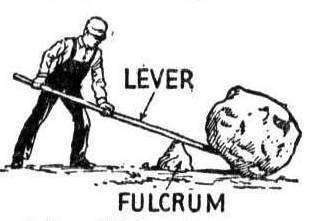
The "rocking" Fulcrum?

 https://youtu.be/B7iFQWYQwEM A MOVING FULCRUM IS NOT A FULCRUM, see image. I think I will remain in solidarity with my Ph.D. Engineer, and Tai Chi Master Stephen Hwa. I am constantly meeting students who are calling a "lever" a "fulcrum" and then there is the "OUCH" factor:


A student quoted and then asked: "I have a quote, "The hips are the fulcrum of the body and connect the upper with the lower.” (https://citylifestyle.com/los-angeles...) Explain why Master Hwa thinks that the hips should remain less mobile than the waist".
A response from Sifu James Roach: How can people say things like "ALL of the movements are generated by the hips first, not the waist," "turn your hips, etc. This is something that can put a very painful torque in the knees. This refrain and misunderstanding of the hips role indeed appear prominent and quite vocal in studying the large frame Tai Chi Style. The hips are a large and complex joint of the body and, like any joint, are necessary for movement. They are necessary for movement but not sufficient to power or "generate" movement. In other words, they do not move in and of themselves but move as a result of action initiated by other parts of the body.
Stating that they are "the fulcrum of the body and connect the upper with the lower" still is not a sufficient explanation of what powers or "generates" their movement. A crowbar at its bend ) is also a fulcrum but without a source of power "generation," it is just a metal bar. What exactly is the mechanism that they use to move in and of themselves? There is no such self-perpetuating mechanism in the hips wherein one can "generate movement."
The hips "permit," "allow," "tolerate," "provide for" movement, but they do not "generate movement generation of movement for our hips comes either from our legs or from our waist and not from the hips themselves. See the attached video for examples of what happens when practitioners turn hips and waist simultaneously. In large frame Tai Chi, the movement of the legs to turn the hip is "folding the hip or Kua." A leg pushing the body either forward or backward makes one hip rotate into itself, and the other rotate out of itself, hence the inguinal "fold' so coveted by large frame practitioners.
As far as "Power" is concerned, one will reduce or drain off power when turning the "hip first" (which, as we said, is impossible because it does not generate its movement). Keep the hip still and then turn the hip "first," and you can readily see the difference in the "generation" of power. The hips can rotate forcefully in a large frame once the legs push the body and reach the apex of a weight shift. As we have stated previously, however, power drains after rotation. The compact frame does this by pulling.
In contrast to pushing, pulling moves are internal and stay energized. Energy is not lost but constantly recirculated and not dependent on legs for power. Talking about "fulcrums" is of prime importance as to how one locates or places a working fulcrum. In the video, one can see the turning of hips lowers the yin/yang junction (fulcrum) to an area of the knees. In the background, one can readily see several practitioners of "external" style Tai Chi turning their bodies at the hips, lowering the junction to the area of the knees in the mistaken impression that "generating movement by the hips first and not the waist" can be used to "turn the body."
Master Stephen Hwa, Ph.D. says: "The most important instruction on Internal Discipline passed down from Wu Chien Chuan to my teacher Young Wabu is that": "Every movement in Tai Chi Form has to have two complementary parts of the body, a moving part (called Yang) and a stationary part (called Yin). When the yin-yang junction locates in the torso of the body, it is an internal move. When it is outside the torso, it is an external move".
27
People reached
12
Engagements
You and 5 others

Friday, January 28, 2022

You will run into "traffic" in learning Tai Chi


My take as well as one of my students who is a teacher of one big (but "navigable") reason on why students quit: (Inactivity is potholes so keep driving)No video or pictures, just an analogy as to why learning this is a "challenge": Master Stephen Hwa strongly advocates learning by video at Classical Tai Chi Teachable.com. He has said himself that he could not remember his own teacher's lessons until he made a video of his lessons. He has said his students in Rochester came to "like" Square Form once he made videos of it. He urges students to "just watch", "just listen" numerous times to videos before attempting the lesson. My student Tom Kostusiak says learning Classical Tai Chi is a "challenge" and I narrow down that definition here. One can teach Tai Chi and wonder why students do not "get it." The "get" part is a kind of "disability in education." It is not dumb or stupid. Some students learn better by seeing things (visual learning) and some learn better by hearing (auditory learning). Hence the continuation of advocating for both classroom and video learning.
"So, one needs to find ways to see the information more often," said the "visual learner". "So one needs ways to hear the information more often said the "auditory" learner." One might well say students who specifically have a difficulty
Using an analogy of being stuck in traffic might help here: One certainly knows the feeling of helplessness that comes with seeing and getting stuck in traffic. Here are 2 analogies: "Well, I hit traffic, that's it, I must be the worst driver ever." "Well, I hit traffic, my car must be the worst car ever built" "It's not me, it's not my car, I should just go home, stop trying to drive"
Ridiculous, right? Yet I see students doing this analogous to Classical Tai Chi all the time. Those "visual" or "auditory" learning problems in a strong sense are like traffic in the brain. When you hit the road that is your processing, we will call it "disorder" and it might feel slow and frustrating, like traffic. But it's not the driver's (student as the driver) or the cars—(teacher as the automobile) fault.
This can be translated to your "challenge" of learning Classical Tai Chi. You are having some "traffic" and it is certainly no reason to stop on your journey of learning. "Oh darn, I hit traffic. Looks like I'll have to find a way around it." The way around it could be a strategy or an accommodation the student uses. Which could be more emphasis on "visual" by watching a video many times before trying to do something. Which could be more emphasis on "auditory" by listening to a video many times before trying to do something. I have heard students say their brains would literally forget things they did in class right after hearing them. Other students say their brains would literally forget things they did in class right after they saw them.
Bottom line: It is just traffic in the brain on the short-term memory road. that students can find ways around it."

From Sifu Tom Kostusiak: What I like to say is learning Tai Chi is neither easy nor difficult. It is a challenge, much like being outside in Buffalo, in the Winter. You bundle up, you pay attention, stay focused, where you are walking and you get to where you need to be in the most direct way possible.
Now tying this into traffic.
When on your way home from work during a snowstorm, you need multiple alternate routes, just in case. I stay off the Thruway because I would rather get stuck on a city street. I would rather spend my night in a pub than in my car on the Thruway. My alternate routes include less traveled streets. There may be more snow, but there will be fewer cars in the way. Learning Tai Chi is similar. You need to figure out what is your best path to travel. Is it auditory, is it visual, is it in the classroom? Is it a combination of alternate plans, just in case you get stuck?

Sunday, January 23, 2022

You know your are doing "internal", when...


WHEN YOU ARE DOING INTERNAL

1.) How do you know, not just "believe" you are doing "internal"? 2.) Well, can't you see "internal" movement on Master Hwa since he does not wear one of those Tai Chi uniforms that is so big it makes a tentmaker envious? 3.) My question to a Tai Chi instructor in 1977: "Can you show me an "internal" movement? He said: I'm doing it but you can't see "internal movement". 4.) So if you can see it on Master Hwa but some teachers say you can't see it on them, others, or yourself, how do you know? 5.) Why not ask, why you can't see it instead of "believing" a teacher and ask what can I do to "get it"?

In Classical Tai Chi, you know that you are doing "internal" by self-examination (seeing) where the movement is originating in the torso of your body. In fact, you know whether anyone is doing "internal" by examining (seeing) their movements. You can see these things for yourself in your own body but as you progress you can feel (tactile) whether the movement is originating inside or outside the torso.
Master Wu Chien Chuan passed this on, that every move has to have Yin and Yang (not moving and moving) parts of the body and those are either in the torso (internal) or they are not (external). The moving and not moving parts form a "junction" called a Yin/Yang pair. One part of the "pair" moves and the other part does not move.
Much Tai Chi says it is "internal" but ask yourself the following question when you see it: 6.) Is the movement originating in the torso or is it originating in an extremity outside of the torso such as arms, legs, etc. ? You also have to reckon with the fact that any "extremity" is the furthest point or limit of something and that internal is always situated on the inside.

Monday, January 10, 2022

Drop and Turn


Drop and turn slightly


Jim R said: In the video link above, If you want to train the popular "Mindfulness", notice how many times you forget to do the following for each and every footstep while doing the form. Master Hwa: "Remember the principle; every move you teach them they should get some benefit." Jim R: In this instance, he is referring to the uber subtle turn of the pelvis which makes it "internal" and "mindful". In fact, he even uses the word "pelvis" as he turns it to put the foot down flat, BEFORE he moves the body. As well as Master Hwa's pelvis seen turning (look carefully), you can see that Jason "gets it" as you see his right side of pelvis turn in to lower the foot. This is the epitome of even the most subtle move being taught and yielding "benefit" to the body core. Most people will "plop" their foot down, the body moving AS they put down the foot. He shows the "external" move as he makes the sound "aaauuuh". When it is done that way it is "mindless", and not an "internal" movement. The analogy that comes to mind is that of a rocking chair. The body is the "chair" and the incorrect movement of the foot is the "rocker" itself. Someone pushing or pulling you as you "rock" will find it easy. Actually,, it reminds me of the "controlled falling" we do when we walk without being "mindful".


Tuesday, January 4, 2022

Can you "stick" around?

Push, stick and yield


Jim, Greetings! I am curious why i see no videos of pushing being practiced as it only seems to be discussed by Master Hwa.
Hi, In a sense you are correct but actually there are quite a few. I have taken this statement out of its original context but in case you have not seen any videos, here (Push, stick and yield) is a video link to a snippet of one. You know as a teacher I find some students take to it and for some it is a psychological and physical conundrum. In another sense it is a metaphor for human interaction. As a metaphor there is "sticking" in push hands and in life. Can you "stick" to listening to me talk till I finish, "stick" around long enough to learn the form before push hands, till there is "change" and not "resistance"??? "Change" in push hands, they push, you yield, you push, etc. "Change", the central question of humanity, it comes too fast, it comes too slow. Something Master Hwa taught me is the importance of first learning to push and yield "cooperatively". You can experience this even with no partner by following these moves and "push" to the angles, angle down, up, L, R. You use "quarter body" internal movement and follow it with an external "stretch"of either arm.

Friday, December 24, 2021

How to connect arm to core


Questions and observations of 2 students:
These are the courtesy of Master Stephen Hwa at the Classical Tai Chi Teachable.com, a streamlined course.
Helen A,
When I try to move my arms from my back muscles, as you recommend, I feel the muscle movement in my stomach area (core muscle?). Does this mean that I am doing the action correctly?
Master Stephen Hwa: You got it!! This exercise aims to connect arm movement to the back and the abdomen muscles so that eventually, you can use the energy of these muscles to power the arm movement.
Steve S.
Sir, what should you feel in the abdomen? As you push forwards, do you pull the core to the right? Or should it feel like your pulling the abdomen backward and to the right? Many thanks. Respect
Master Stephen Hwa: The important thing is to connect your arm to the core. Once you are connected, the forward push movement of your arm will teach how the abdomen should react. Once you are good at that, you can reverse the procedure by moving the core to move the arm forward. There is no simple way to explain how the muscle in the abdomen should move..

Sunday, December 19, 2021

The waist turns on a radius


 Consider what Master Hwa is doing as the following paraphrase and analogy of his arm as "belt" moved from center. “Neijia” v. "Waijia” ; whether quarter, half, upper body turn: “It is known and practiced by all competent golfers, tennis players, etc. The strength and mass of the body is in its center, so it makes sense to begin and control motion at the waist. Consider this illustration. Hold one end of a long belt in one hand. Imagine that end to be the center of a circle, with a radius equal to the length of the belt. If you try to describe the periphery of the circle by using your other hand to move the free end of the belt, your efforts will be slow and awkward. However, if you leave one end to swing free, and merely flip the wrist of the hand holding the “center” end, the belt will swing around and around, smoothly and with great speed. Beginning at the center; returning to the center. Tai Chi is basically a conservative philosophy of motion. Conservative as in conservation. One of the priorities is simply to endure - energy flows in circles, always returning, never exhausted. This is a kind of thinking that we are beginning to understand as we foresee that in the future we may have exhausted the world’s once “inexhaustible” energy reserves. Tai Chi is also recycling of energy - and it demonstrates that for each of us our bodies can be a microcosm of the whole physical universe."

Lui, H. H.; Horwitz, Tem; Kimmelman, Susan. Tai Chi Chuan: The Technique of Power (Chinese Taoist Texts) . Cloud Hands Press. Kindle Edition.

Sunday, December 12, 2021

Caveat Emptor re. Push Hands

Caveat of Push Hands  a video link


From a stranger who visited Master Hwa's Facebook page, "liked" it but then reacted with suspicion when I made a "friend request". He thought someone had "hacked" me as to why I had sent it. I explained I was Master Hwa's student.
In brief he said: "Hi Jim, sorry for any misunderstanding. Does Classical Tai Chi do Push Hands?"
If I could gain contact with him once again I would say "YES". I would add that the subject of Push Hands has a caveat emptor similar to buying a house for instance...responsibility for quality lies with the "buyer". I would then would add that the myriad of written material, video, Youtube, Teachable, and book mention it dozens of times. I would add that Tolstoy said it very well. But in a "nutshell" I say it is when he wrote about people who "don't know that they don't know". How can anyone who has not learned the Classical Tai Chi Forms ask that question? Because of the wealth of material on this caveat I would refer him to "Fajin, Part 1". I would say: Stand perpendicular at a perfect right angle to the floor, feet perfectly parallel and push the wall many times with your fist just as Master Hwa demonstrates. If you can honestly say you are not pushed backwards, losing your footing each and every time, then you can understand the "YES" answer I gave.

Thursday, December 9, 2021

Understand the capability of "Dan Tien"

 Understand the capability of Dan Tien

I  don`t understand when using internal movement how do you keep your abdomen loose, or is that myth not true.(Maurice B.) 

I am finding the Tai Chi Walk difficult probably due to my having to break old habits with the Yang Style. But it is coming along. The step backward is awkward in that I find it hard to keep my buttocks tightly in and pivot at the same time. (Jim D.)

 Master Stephen Hwa:  The sit back move requires you to fully tuck in the behind by energizing the abdomen and at the same time you have to be able to turn at the waist with ease and with power to ward off opponent' s attack (see Figure 9). 


                                            Figure 9

The above examples illustrate that the Dantian has to be able to do multitasking. One has to understand that energizing the Dantian for certain move is different from tensing up the Dantian. Tensing or stiffening the Dantian immobilizes the entire section of that part of the body indiscriminately. Energizing is a selective utilization of certain muscle for a certain function. Energizing has the character of agility, sudden surge and ebb not static.

Even "tuck in", also called "stretch down tailbone" should be fluid in nature. So, even one is fully tucked in, one should still have the feeling of suppleness (pronounced "soong" in Chinese) at the Dantian. A simple picture of what is going on during the sit back and ward off movements mentioned above could be as follows: 

The tuck in move uses the Rectus Abdominis muscle, while the turning move uses the the External and Internal Obliques. Even though both muscles are next to each other in the same region, with the yin-yang training in tai chi, one should be able to use its distinctive feature independent of each other or in cooperation with each other. All those attributes mentioned above can be developed by practicing the Tai Chi Form. I have seen this among my students.


Architects of Stillness: The Revolutionary Biomechanics of Small Circle Tai Chi

Those Old Masters were Architects of Stillness: How Classical Tai Chi’s "Small Circle" Rewires the Body for Healing  The Proprioce...