Monday, March 7, 2022

Tai Chi is better than walking for improving balance!

Tai Chi is better (link to NPR) (broadcast)

Youtube Classical Tai Chi walking


In order to really reduce your risk for falls, you've got to do something specific to balance.Classical Tai Chi teaches you to do stepping moves to the front, to the side; you move your arms out, you reach, you bend. And basically, that increases the size of your postural stability so that you can catch yourself and not have a fall. You can be a little bit off-kilter and right yourself.  As an added bonus, Classical Tai Chi trains your movement from the body core in a matter that is superb in its dexterity. The video explains more ... 

Walking is called "controlled falling" for a reason. Essentially when you step you catch yourself by thrusting out a foot. Just walking does not reduce your risk of falling.Walking is kind of just keeping you in one plane moving forward, and it's not doing any kind of postural training. 

As we age, the risk of falling increases and becomes increasingly perilous. A fall can be a real health setback for a frail, elderly person. And, more older adults are dying from falls today than 20 years ago. A recent study showed that more than 25,000 U.S. adults age 75 or above died from a fall in 2016, up from more than 8,600 deaths in 2000, and the rate of fatal falls for this age group roughly doubled.

But the risk of falling can be minimized, says Dr. Elizabeth Eckstrom, professor and chief of geriatrics at Oregon Health & Science University. "A lot of older adults and a lot of physicians think that falling is inevitable as you age, but in reality, it's not."

NPR's Lulu Garcia-Navarro and Luisa Torres spoke to Eckstrom about the most common causes of falling among seniors and the best ways to prevent them.

This interview combines two separate conversations with Eckstrom and has been edited for clarity and length.

Are seniors falling more than they used to? Or are there more seniors? Does something else explain this increase?

I think it might be a little bit of both. There are so many more seniors, and there's probably better reporting than there used to be. There's more awareness about falls as older adults and doctors are starting to think about it a little bit more. I think our older adults are starting to [be more active], and that also is going to put you at risk for falling. I always tell people to please not be sedentary to prevent falls. That's the worst thing you can do. You've got to be out and active, but being out and doing things does allow you to put yourself in a position where you could fall.

Also, I think one of the biggest problems for falls is that so many older adults are on risky medications. Those sleeping pills, pain pills, a lot of the drugs that older adults have been prescribed for years and years have markedly increased the risk for falling. And if we could get everybody off of those pills, it would be so helpful.

How do pain pills increase the risk of falls?

Pain pills have similar side effects [compared to] sleeping pills. They can make you dizzy. They can make you confused. They can make you lethargic. They can cause you to not be as sharp so that you're not paying attention to curbs or uneven sidewalks.

Are there any other drugs that seniors should be aware of?

Yeah, absolutely. There are a lot of drugs that fall into a class called anticholinergics. It's the class that has cold medications in it, like Sudafed PE, [and] drugs to help control bladder problems, like Detrol. All of those drugs are in that very dangerous anticholinergic class, [which] increases your risk for falling.

The other thing that a lot of older people take is blood pressure pills. Managing blood pressure is a little tricky [because] you don't want your blood pressure to be too high because that increases your risk for heart attacks and strokes. But if you take too many blood pressure pills, it makes your blood pressure too low, and you get dizzy and you fall.

A study from the Centers for Disease Control and Prevention found that physicians routinely failed to perform basic interventions to help prevent falls. Why do you think that is, and how could doctors help?

Most primary care doctors have no more than 15 minutes with a patient, and they're managing their diabetes, congestive heart failure, their asthma — all of those other medical conditions. And [they] don't recognize the importance of fall prevention in that milieu. It takes a lot of work to help older adult reduce their risk of falling. You've got to talk about the glasses; you've got to make sure they're wearing the right shoes; you've got to make sure they're using a gait aid [like a cane or a walker] if they need one — and all of those things take time.

The CDC has also done a beautiful job of putting together a fall prevention package in an initiative called STEADI (Stopping Elderly Accidents, Deaths & Injuries). You can go to their website and find all sorts of useful information to help both clinical teams, older adults and families to reduce risk for falling.

Can you remind us why falling is so dangerous for older adults?

About a third of older adults who fall actually have some form of injury, and a lot of those are hip fractures and head injuries. And those can be fatal, of course. A vitally important thing is fear of falling, and many older adults who fall curtail their activities because they're afraid they're going to fall again. And, again, that's kind of the worst thing you can do because now you're losing mobility, you're getting weaker and you're not moving around as much.

What are some of the interventions you've used that can help seniors?

You can do so many things. First of all, I tell everybody you've got to do some balance training. Tai chi is probably the best exercise to prevent falls, but whatever works for you. And interestingly, just walking does not reduce your risk of falling. So a lot of doctors will say, "Just get out and walk 20 minutes every day, and that'll keep you safe. That'll help you stay healthy." Walking is great for your heart; it's great for your brain; it's great for lots of it. But in order to really reduce your risk for falls, you've got to do something specific to balance.

What makes tai chi a good exercise to prevent falls? And why isn't walking a good alternative?

Walking is kind of just keeping you in one plane moving forward, and it's not doing any kind of postural training. What tai chi does is it gives you an increased area of postural stability, [which is] kind of your being able to remain upright in space. When you do tai chi, you do stepping moves to the front, to the side; you move your arms out, you reach, you bend. And basically, that increases the size of your postural stability so that you can catch yourself and not have a fall. You can be a little bit off-kilter and right yourself.

Do you have any more advice on how seniors can prevent falls?

For most people, it's not just one bad thing. It's not just your balance, or it's not just your vision, or it's not just one pill that you're taking. If somebody wants to reduce their risk of falls, they should really think about all of the various ways: making sure you're wearing the right shoes, using a walker if you need it, getting off those risky medications. It's really important to tend to all of those little details to really get your fall risk as low as possible. I encourage people to just work on that really, really hard. It's worth the trouble.

Francesca Paris and Ed McNulty produced and edited this story for broadcast.

CorrectionJuly 15, 2019

A previous Web version of this story stated that Sudafed is an anticholinergic. It is not, but the more commonly available Sudafed PE is.

Tuesday, March 1, 2022

Being good at mindlessness!

 After finishing the lessons...thunder, lightning...a real "jolt"...a "shock"... but upon further reflection...realizing one's mindlessness is a beginning...


51. ChĂȘn / The Arousing (Shock, Thunder)I Ching

 SHOCK brings success.
 Shock comes-oh, oh!
 Laughing words -ha, ha!
 The shock terrifies for a hundred miles,
 And he does not let fall the sacrificial spoon and chalice.


As a human, I have spent my share of anger.  As a Tai Chi instructor, I have also seen my fair share of anger “coming and going” as the saying goes.  There is a baseball adage wherein one figuratively acts as “pitcher” and “catcher” at the same time, thus my own saying “As a teacher, I see anger coming and going”.  My student and fellow teacher Mike F. tells me that as a professional musician he swims in a sea of perpetual criticism.  Such criticism he says comes from his fellow musicians as well as orchestra leaders and conductors.  Yet, he states that he does not lash out at the conductor or his colleagues.

I recall an incident in 2004 which happened right after meeting my present teacher, Master Stephen Hwa. I was in the throes of patting myself on the back because I had learned the Classical Tai Chi form with quite a bit of ease.  What I failed to perceive is “that I was moving a certain way, but in fact, I was not moving that way” at all. After all, I thought,   I had finished the lessons from the Classical Tai Chi video series. Master Hwa wrote that when he observed me trying to internalize my movement away from the arm and shoulder, my movements initiated from the chest area.  He stated that I would scrunch my chest to start an upper-body movement. 

I recall being admonished quite vehemently by him on this “scrunching”.  The critique came during one of my private classes with him at a local park in Rochester, NY in the Summer of 2004.  I admit to being surprised by the vehemence of his correction but did not feel angry. 

In October of 2004, I recall reading the Classical Tai Chi Forum 10 which was called: “After Finishing the Lessons, A Beginning”.   There I came across a complete written account of the critique.  First I read “You need to remember, sometimes the appearance of reality is actually an illusion”.  This was followed by an admonition to use “ a fresh eye to review the lesson video which can uncover any misinterpretation of movements”.   Then I read a synopsis of my meeting with Master Hwa and my “scrunching” when I thought I was moving correctly.

Where I did not feel “angry” upon receiving admonition in person, I did feel angry when reading the admonition in writing.  My thought was: “How could my teacher put my mistake in writing for all the world to see”?  I initially felt sullen and angry because I felt my teacher was being condescending and insulting and I felt shocked by what I read.  After all, I thought (even though he did not use my name but simply said “one student”) who else could it be but for me, me, me.  Insert the melody and additional lyrics for:  "You are so vain, you probably think this song is about you" here.

After stewing on this for some time, I began to reflect more calmly.  During the “hottest” moments of that incident, however, I refrained from making any angry retorts to my teacher.  As I “cooled” down, however, I began to realize that I had been mindless, proud, and arrogant thus thinking more highly of myself than I ought to.  Upon further reflection, my initial angry thought was “I have studied Tai Chi before this for a long time, I am a good student, how can he say this to me”?.   After further consideration, however, I realized that it was I who had contacted Master Hwa and asked him to teach me, not the other way around.  If I wanted him to teach me why was I not being humble and gracious about what he had said or written about “me”? After further reflection, I realized that he had provided a great talking point and lesson for a hundred other students who could benefit from my mistake. 

I realized I was being “Egotistical” and mindless over the egotism and perhaps one might well ask what is egotism,  what does it have to do with learning Tai Chi or you for that matter?

Here is a "story" that may help:

“The Prime Minister of the Tang Dynasty was a national hero for his success as both a statesman and military leader. But despite his fame, power, and wealth, he considered himself a humble and devout Buddhist.

Often he visited his favorite Zen master to study under him, and they  seemed to get along very well. The fact that he was Prime Minister apparently had no effect on their relationship, which seemed to be simply one of a revered master and respectful student.

One day, during his usual visit, the Prime Minister asked the master, “Your Reverence, what is egotism according to Buddhism?” The master's face turned red, and in a very condescending and insulting tone of voice, he shot back, “What kind of stupid question is that!?”

This unexpected response so shocked the Prime Minister that he became sullen and angry. The Zen master then smiled and said, “This, Your Excellency, is egotism.”

Author Unknown

THE IMAGE


 Thunder repeated: the image of SHOCK.
 Thus in fear and trembling
 The superior man sets his life in order
 And examines himself.

Tuesday, February 22, 2022

Do not "break at the waist"


Michael wrote that he recently purchased Master Hwa's DVD series and has some questions about the Tai Chi Classics saying not to lean the body, the weight distribution of the body, the Tai Chi Classics, and Yin and Yang:


"As I watched the video more intently, I'm being drawn to the movement of the lower limbs from the hips down. Can I assume that master Hwa advocates the separation of yin-yang footing with 100% weight on one leg and the other 0% in all postures (except the end of the single whip)? While I understand the significance of the weight shifting from one stance to another - I'm interested to know the weight distribution of the brush knee step at the end. Is it 100% in the front leg, and the back leg is insubstantial? I'm studying the classics by zhang sang Feng, and the classics mentioned that one should not lean on any side. I would interpret this as leaning forward, backward, or at the sides - but if there is 100% weight on one leg, I do assume that there is a leaning force involve? "


In Classical Tai Chi, my teacher, Master Stephen Hwa, explains the principles of movement (the how and why) in terms of Yin and Yang. He also explains the regulations in terms of "bodyweight distribution." When one moves, they do not let their weight "distribute" itself in an out-of-control manner. Carrying the weight in an out-of-control way is a grievous error and can have both health and martial consequences. This concept is explained in detail: DVD series, Yahoo Email Group, Classical Tai Chi Forum, Classical Tai Chi Website (Table of Contents for DVD). 


When one takes a step forward in Classical Tai Chi, the weight stays 100% on the back foot until the front foot is flat on the ground 0%. The practitioner will then pull the body forward till the bodyweight of 100% is on the front foot, with the back foot becoming 0%. The body weight distribution is both dynamic, fluid, and continuous through all postures with no exception. The correct movement for weight distribution is illustrated in the Tai Chi Walk, as seen in the attached video link to Youtube.


An understanding of "leaning" in Classical Tai Chi should encompass the thought that one should take the Tai Chi Classics with the proverbial "grain of salt." The Classics are, as Master Hwa has said and are "attributed to various authors." Regardless of who wrote them, we did not hear of them until Wu Yu Xiang "finds them in a Salt Shop." The Classics, for one, do not specify what they mean by "lean." Did "do not lean" by the mystical Zhang Sanfeng mean do not lean at all, do not lean too much? ć€Ÿæ–œ, is defined as "incline, tip, bias, slope, but I cannot find the word "lean" defined as "incline" in Chinese. Lean in Chinese is more like "thin" as in a lean piece of meat. happen to like "incline" better than the word "lean" used for Tai Chi terms and in pinyin one says "Qingxie." 


There is the term "incline" in the Wu Family Gold Book as elucidated by Grandmaster Wu Kung Cho. What he means is do not "incline" by breaking at the waist. You see a lot of "breaking at the waist" in some styles of Tai Chi; it is painful to watch. Master Hwa does use the term "lean." In his explanation, he makes it work in English where "incline" would not. He does not caution against it, as does Zhang Sanfeng; on the contrary, he tells us how and why we need to do it. You can read it in detail on page 56 of his treatise in "Uncovering the Treasure." I think there is a crucial point regarding not "breaking at the waist" when he says: "The head, the body, and the back leg form a straight line in the lean forward." One can readily see that breaking at the waist would break the straight line and any energy flow. 


To sum it up, while having some key insights, the Classics are often filled with "contrariness" and can be very cryptic. Therefore, I would not attribute deviation in basic principles of Classical Tai Chi to what are often contrary statements in the Tai Chi Classics, hence "take it with a grain of salt." No pun on the "Salt Shop" of the Classics discovery intended. 

Thursday, February 10, 2022

Why Square Form looks Robotic


https://www.youtube.com/watch?v=FvaXibEWIm8 "Robotic Tai Chi" Link. Why Classical Tai Chi Square Form looks "Robotic": Look deeper than the solid and broken I Ching lines in the diagram below. Note the points inside the circle below where straight lines actually touch the circle and voila we have eight, ( 8 ) straight lines, which is an Octagon. Now geometry tells us we can make those straight lines VERY small and have many POINTS. Note how the "roboticness" disappears as the number of straight lines increases we cannot see them anymore and yet a very nice circle results. Here's a link to a "Triacontagon" https://en.wikipedia.org/wiki/Triacontagon where you can still see 30 straight lines and points making a circle. Here is a Chiliagon with 1000 sides making the circle which of course you cannot see https://en.wikipedia.org/wiki/Chiliagon. The example of a chiliagon is also referenced by philosophers. David Hume points out that it is "impossible for the eye to determine the angles of a chiliagon to be equal to 1996 right angles, or make any conjecture, that approaches this proportion." When we do the small circle, small frame square form as you see in the misunderstood "Robotic Tai Chi" video link, those become very small straight lines. In fact, the more robotic the better. It gets very small straight lines, think things like 64, 128, to make the circle. How many there are depends on the skill of the practitioner. Yes, it also gives us more points on the circle and those points are where the form changes directions. Think of the possibilities as far as the martial application is concerned if you can change direction so fluidly going to a plethora of tight angles so well. Do you see all of the articulations at the joints, shoulders, elbows, knees, hips, etc? All of those articulations result in the extremities, arms, legs, etc. moving in straight lines from POINTS of articulation. Is this not seeking the straight from the curved and the curved from the straight as well? Just as the Tai Chi Classics say.

Saturday, February 5, 2022

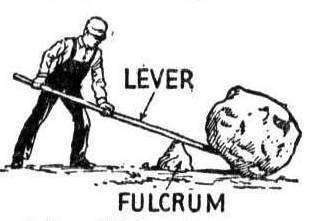
The "rocking" Fulcrum?

 https://youtu.be/B7iFQWYQwEM A MOVING FULCRUM IS NOT A FULCRUM, see image. I think I will remain in solidarity with my Ph.D. Engineer, and Tai Chi Master Stephen Hwa. I am constantly meeting students who are calling a "lever" a "fulcrum" and then there is the "OUCH" factor:


A student quoted and then asked: "I have a quote, "The hips are the fulcrum of the body and connect the upper with the lower.” (https://citylifestyle.com/los-angeles...) Explain why Master Hwa thinks that the hips should remain less mobile than the waist".
A response from Sifu James Roach: How can people say things like "ALL of the movements are generated by the hips first, not the waist," "turn your hips, etc. This is something that can put a very painful torque in the knees. This refrain and misunderstanding of the hips role indeed appear prominent and quite vocal in studying the large frame Tai Chi Style. The hips are a large and complex joint of the body and, like any joint, are necessary for movement. They are necessary for movement but not sufficient to power or "generate" movement. In other words, they do not move in and of themselves but move as a result of action initiated by other parts of the body.
Stating that they are "the fulcrum of the body and connect the upper with the lower" still is not a sufficient explanation of what powers or "generates" their movement. A crowbar at its bend ) is also a fulcrum but without a source of power "generation," it is just a metal bar. What exactly is the mechanism that they use to move in and of themselves? There is no such self-perpetuating mechanism in the hips wherein one can "generate movement."
The hips "permit," "allow," "tolerate," "provide for" movement, but they do not "generate movement generation of movement for our hips comes either from our legs or from our waist and not from the hips themselves. See the attached video for examples of what happens when practitioners turn hips and waist simultaneously. In large frame Tai Chi, the movement of the legs to turn the hip is "folding the hip or Kua." A leg pushing the body either forward or backward makes one hip rotate into itself, and the other rotate out of itself, hence the inguinal "fold' so coveted by large frame practitioners.
As far as "Power" is concerned, one will reduce or drain off power when turning the "hip first" (which, as we said, is impossible because it does not generate its movement). Keep the hip still and then turn the hip "first," and you can readily see the difference in the "generation" of power. The hips can rotate forcefully in a large frame once the legs push the body and reach the apex of a weight shift. As we have stated previously, however, power drains after rotation. The compact frame does this by pulling.
In contrast to pushing, pulling moves are internal and stay energized. Energy is not lost but constantly recirculated and not dependent on legs for power. Talking about "fulcrums" is of prime importance as to how one locates or places a working fulcrum. In the video, one can see the turning of hips lowers the yin/yang junction (fulcrum) to an area of the knees. In the background, one can readily see several practitioners of "external" style Tai Chi turning their bodies at the hips, lowering the junction to the area of the knees in the mistaken impression that "generating movement by the hips first and not the waist" can be used to "turn the body."
Master Stephen Hwa, Ph.D. says: "The most important instruction on Internal Discipline passed down from Wu Chien Chuan to my teacher Young Wabu is that": "Every movement in Tai Chi Form has to have two complementary parts of the body, a moving part (called Yang) and a stationary part (called Yin). When the yin-yang junction locates in the torso of the body, it is an internal move. When it is outside the torso, it is an external move".
27
People reached
12
Engagements
You and 5 others

Architects of Stillness: The Revolutionary Biomechanics of Small Circle Tai Chi

Those Old Masters were Architects of Stillness: How Classical Tai Chi’s "Small Circle" Rewires the Body for Healing  The Proprioce...